AssemblyAI: The Speech AI That Actually Works for Startups
Dr. Ananya Mehta
Mar 4, 2026
Turn Conversations Into Product: AssemblyAI as a Strategic Growth Lever
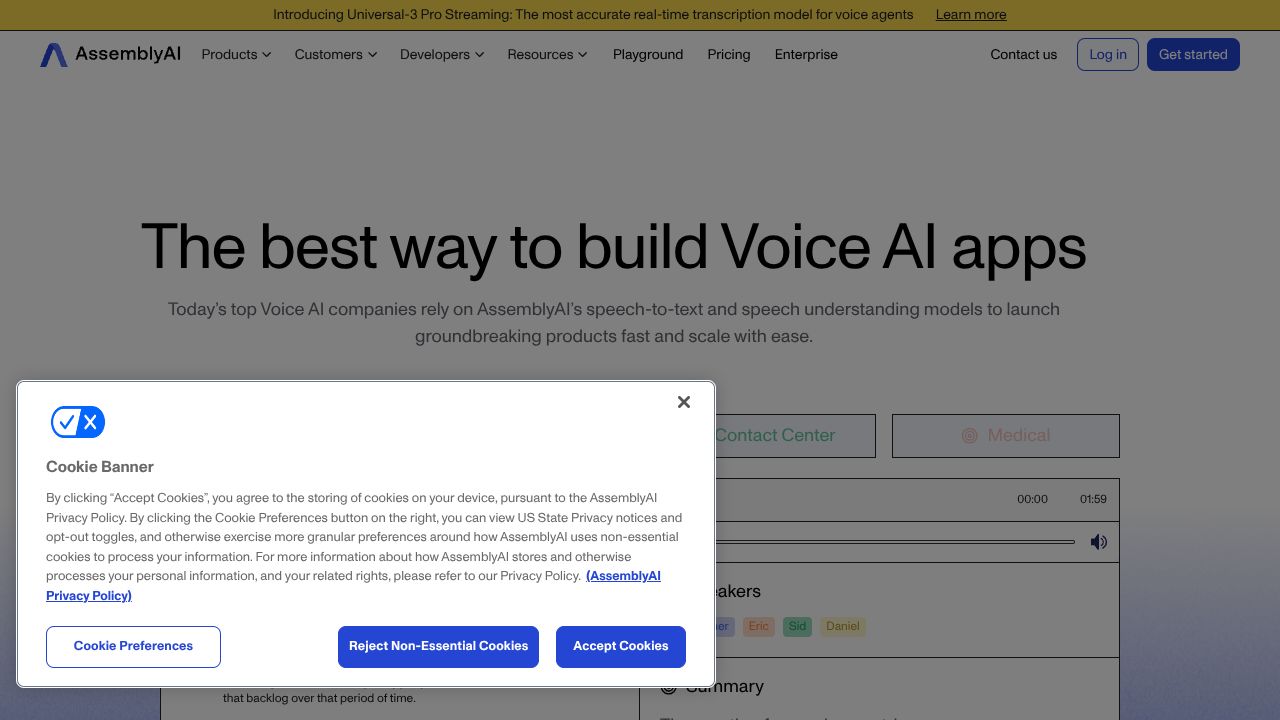
Voice is the next data stream, and manual transcription is a tax on speed. AssemblyAI is a developer-first, AI-powered speech-to-text API that converts audio into structured, actionable data with high accuracy and add-on “audio intelligence” (summarization, sentiment, PII redaction). For startup leaders, the bottom line is simple: faster time-to-value for voice features, lower operational cost than humans-in-the-loop, and fewer moving parts than piecing together multiple services. Learn more: https://www.assemblyai.com
The Business Case
Speech-native workflows—sales calls, support tickets, product feedback, user research, and media—are under-monetized data assets. AssemblyAI turns these streams into structured data your product and ops can consume: searchable transcripts, topic tags, highlights, and risk flags. Compared to human transcription, our analysis shows typical turnaround time improvements from days to minutes, while per-minute costs drop by an order of magnitude in most scenarios. More importantly, transcription becomes a platform capability: features like auto-generated notes, in-call coaching, content moderation, and insights dashboards ship weeks faster because summarization, sentiment, and PII redaction are built in.
While Amazon Transcribe, Google Cloud Speech-to-Text, and Microsoft Azure Speech are strong within their cloud ecosystems, AssemblyAI’s value for startups is its streamlined developer experience, focused roadmap on speech accuracy, and clear usage-based pricing. That combination compresses integration timelines and reduces dependency sprawl—practical advantages when runway, talent, and speed-to-market are the constraints. For Founder Fueled readers, this is “Journey Resources” that compounds: one integration, multiple product capabilities.
Key Strategic Benefits
-
Operational Efficiency: AssemblyAI consolidates transcription and post-processing (summarization, sentiment, entity extraction, PII redaction) in one API, reducing the need for multiple vendors and glue code. Teams move from raw audio to structured insights with fewer steps, cutting QA and maintenance overhead.
-
Cost Impact: Usage-based pricing replaces fixed headcount or agency fees for transcription. By automating note-taking and tagging, teams reallocate human time to revenue activities (coaching, product iteration). The data shows improved funnel instrumentation (from call notes and intent signals) can lift conversion and reduce churn.
-
Scalability: Async and streaming endpoints support spikes in demand without capacity planning. As products scale from thousands to millions of minutes, autoscaling and webhooks simplify throughput management—critical for real-time features like live captions or post-call analytics.
-
Risk Factors: Validate accuracy across your accents, domains, and noise profiles; even top models vary by use case. Confirm data retention, encryption, and DPA terms meet your compliance bar. Watch for model updates that subtly shift outputs; maintain a regression suite (WER/DER) to detect drift.
Implementation Considerations
Plan a two- to four-week pilot. Resource a backend engineer to integrate upload/streaming, webhooks, and storage; a data analyst or QA to build a test harness; and a product owner to define acceptance criteria. Use a representative dataset (e.g., 500–1,000 minutes) spanning accents, devices, environments, and domains. Measure word error rate (WER), diarization error rate (DER), latency (streaming and async), cost per audio hour, and downstream task accuracy (e.g., PII redaction precision/recall).
Architecturally, decide between streaming (real-time UX, higher concurrency management) and async (batch reliability, simpler retries). Normalize audio (sample rate, channels), handle backoff/retries on webhook delivery, and establish a secure path for PII. Integrate outputs directly into CRM, help desk, or analytics pipelines. For change management, train customer-facing teams on new workflows (auto-notes, tags) and instantiate a light human-in-the-loop review for high-stakes use cases.
Competitive Landscape
While Amazon Transcribe excels for AWS-centric stacks—tight integration with S3, Kinesis, and Contact Center Intelligence—AssemblyAI is better suited for startups prioritizing fastest build-out and simplified billing outside a single cloud. Google Cloud Speech-to-Text is strong in multilingual coverage and robust model variants; if you require broad language support at global scale, Google often leads. Microsoft Azure Speech offers enterprise-grade governance and containerized deployments for edge/on-prem; if data residency or offline inference is mandatory, Azure can be advantageous.
AssemblyAI differentiates with developer-centric docs, rapid iteration cadence, and bundled “audio intelligence” that removes the need for separate NLP services. However, incumbents can have an edge in procurement (existing enterprise agreements), ecosystem lock-in, and region-specific compliance—factors leadership should weigh.
Recommendation
Adopt a structured bake-off. 1) Select two priority use cases (e.g., sales coaching, support QA). 2) Run a two-week pilot with AssemblyAI and one cloud incumbent using the same 1,000-minute gold set. 3) Score WER, DER, latency, redaction accuracy, and total cost. 4) If AssemblyAI meets thresholds, integrate as your default transcription/intelligence layer; retain a secondary vendor for redundancy. This Founder Fuel approach turns Tool Reviews into execution: faster features, cleaner ops, and measurable ROI—a practical source of Inspiration on the founder journey.
READY TO ACCELERATE?
VISIT ASSEMBLYAI