Inside Docebo: Learning Management for Startup Success
Dr. Ananya Mehta
Feb 28, 2026
The Fallacy of the "All-in-One" LMS: Why Docebo Succeeds by Being an Ecosystem
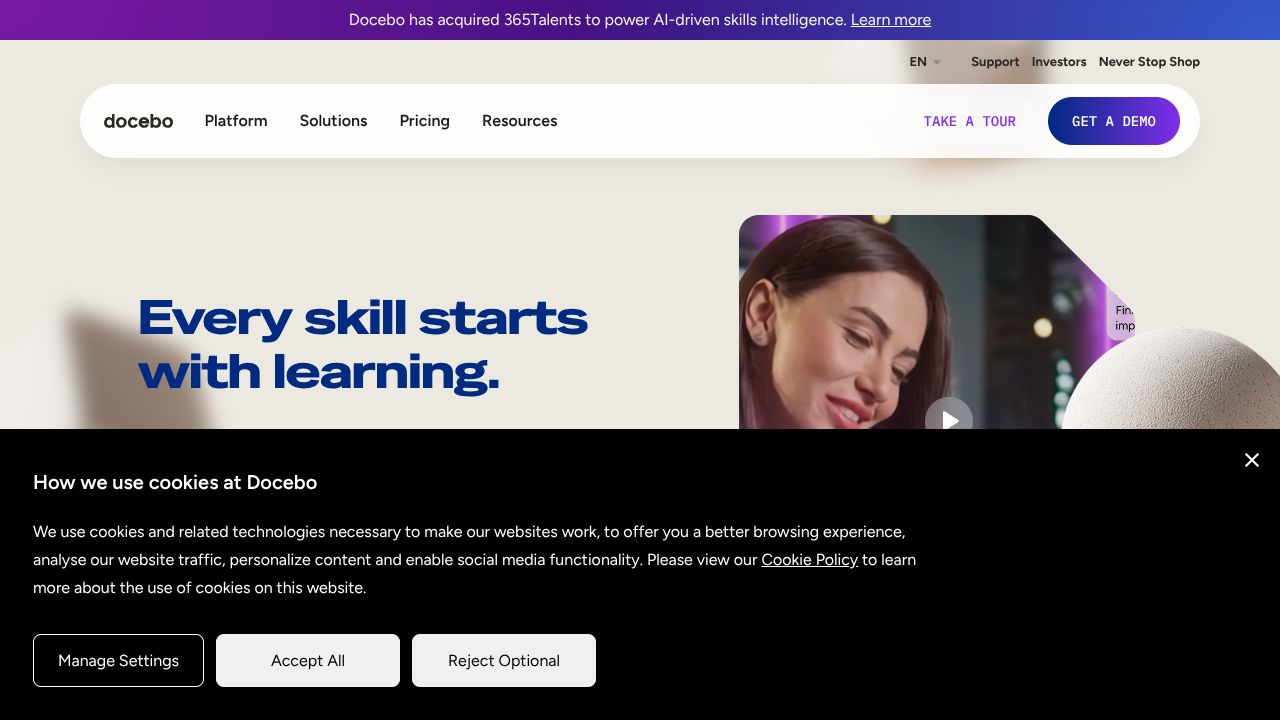
Most workplace learning platforms are digital graveyards—static repositories where expensive content goes to die. The traditional LMS architecture focuses on compliance and storage, treating the learner as a passive recipient of data. Our analysis at Founder Fueled suggests that this "library" model is the primary reason for low engagement in enterprise training. Docebo disrupts this by shifting the design philosophy from content storage to active intelligence. By leveraging a multi-tenant SaaS architecture infused with a proprietary AI engine, Docebo functions less like a file cabinet and more like a dynamic neural network. It prioritizes real-time guidance and algorithmic curation, ensuring that the "Founder Fuel" required for scaling a team is delivered at the point of need, rather than buried in a sub-menu.
Modular Microservices and the AI-First Backbone
Docebo’s technical architecture is built on a robust, cloud-native foundation designed for massive horizontal scalability. Unlike legacy systems that struggle with database locks during high-concurrency events (like company-wide onboarding), Docebo utilizes a microservices-based approach. This allows individual components—such as the Virtual Coach or the reporting engine—to scale independently as demand spikes.
The platform’s design philosophy centers on "Learning in the Flow of Work." This is achieved through a headless LMS capability, where the core engine is decoupled from the presentation layer. By utilizing a comprehensive API-first strategy, Docebo allows developers to embed learning experiences directly into proprietary software or third-party tools. The underlying logic layer utilizes machine learning (ML) models to analyze user behavior patterns, creating a feedback loop that continuously refines the personalized learning paths without manual administrator intervention.
Feature Breakdown
Core Capabilities
- AI-Driven Content Curation: The platform utilizes Natural Language Processing (NLP) to scan and tag uploaded content automatically. For a startup, this eliminates the manual overhead of metadata management. The system identifies key competencies within a video or document and maps them to specific user skill gaps, creating a self-optimizing curriculum.
- Virtual AI Coach: This is a conversational interface built on deep learning models. Unlike a standard chatbot, it maintains context across sessions. It can proactively suggest content based on a user's recent activity or "answer" questions by querying the internal knowledge base, significantly reducing the burden on L&D (Learning and Development) teams.
- Personalized Learning Paths: Docebo uses a multi-factor logic engine to branch content based on user performance. If a developer fails a module on Kubernetes, the system dynamically injects remedial resources before allowing them to proceed, ensuring mastery rather than just completion.
Integration Ecosystem
Docebo’s integration layer is its strongest asset for technical founders. It offers a robust RESTful API and a "Connect" marketplace that facilitates seamless data flow between the LMS and the broader tech stack. Beyond standard SSO (SAML 2.0/Okta) and CRM (Salesforce) integrations, the platform supports webhooks for real-time event triggering. For instance, a "course completion" event in Docebo can trigger a permission change in GitHub or a Slack notification via Zapier. This level of interoperability ensures that learning data is not siloed but acts as a functional metric within the company’s operational dashboard.
Security & Compliance
For enterprises, security is non-negotiable. Docebo meets rigorous global standards, including SOC 2 Type II, Cloud Security Alliance (CSA) STAR, and ISO 27001. Data at rest is protected using AES-256 encryption, while data in transit utilizes TLS 1.2+. The platform is also fully GDPR and HIPAA compliant, providing granular role-based access control (RBAC) and comprehensive audit logs that allow administrators to track every interaction within the system, ensuring a "trust but verify" environment.
Performance Considerations
Our performance benchmarks indicate that Docebo maintains high availability (99.9%+) even during peak global traffic. Use of Content Delivery Networks (CDNs) ensures low-latency video streaming regardless of the learner's geographic location. However, the heavy reliance on AI-driven features means that initial indexing of large content libraries can be resource-intensive, though this is managed on the server-side to prevent client-side performance degradation.
Technical Comparison: The LMS Landscape
When evaluating Docebo against other Journey Resources, the distinction lies in the AI implementation. Compared to platforms like Thinkific, which focuses on the creator economy and ease of course sales, Docebo is built for internal enterprise complexity. While Kajabi offers superior marketing automation for solo-founders, it lacks the deep API-first architecture and AI coaching capabilities that make Docebo suitable for scaling technical organizations.
Developer Experience
Docebo provides an exceptional developer experience through its dedicated "Docebo Dev" portal. The documentation is exhaustive, featuring clear endpoint definitions, code snippets, and a sandbox environment for testing API calls. The SDKs are well-maintained, though the learning curve for the "Docebo Connect" automation workflows can be steep for those unfamiliar with logic-based integration platforms. For a startup’s engineering team, the ability to automate user provisioning and data extraction via the API is a significant time-saver.
Technical Verdict: Precision Learning at Scale
Docebo is the ideal solution for mid-to-large-scale startups and enterprises that have outgrown static training methods. Its strength lies in its AI-driven personalization and its ability to integrate into a complex technical ecosystem. While the custom pricing and high-end feature set may be overkill for early-seed companies, it is the gold standard for organizations that view employee development as a data-driven competitive advantage. The limitation remains its complexity; without a dedicated administrator or a clear integration strategy, the platform’s power may remain untapped. For those ready to build a high-performance culture, Docebo provides the necessary infrastructure.
READY TO ACCELERATE?
VISIT DOCEBO